Getting your blood pressure checked is a routine part of most medical appointments. Yet, when the numbers are read out—like “120 over 80″—many people are left wondering what they actually mean. Is that good? Is it high?
Blood pressure is a vital indicator of your overall health, specifically the condition of your heart and blood vessels. Understanding what these numbers signify and knowing the standard ranges for adults is the first step toward proactive health management. This guide will clarify the definitions of normal, elevated, and high blood pressure levels.
What Do the Numbers Mean?
Blood pressure is a measurement of the force your blood exerts against the walls of your arteries as your heart pumps it around your body. It is always recorded as two numbers:
-
Systolic Pressure (The top number): The pressure in your arteries when your heart beats.
-
Diastolic Pressure (The bottom number): The pressure in your arteries when your heart rests between beats.
Both numbers are important. If either one is consistently too high, it can strain your heart and arteries, potentially leading to serious health issues over time.
Common Misconceptions
-
“I feel fine, so my blood pressure must be fine.” This is a dangerous myth. High blood pressure (hypertension) is often called the “silent killer” because it rarely has noticeable symptoms until significant damage has occurred. The only way to know for sure is to get it checked regularly.
-
“My blood pressure is always high at the doctor’s office.” This is known as “White Coat Hypertension,” where anxiety in a medical setting causes a temporary spike in blood pressure. For this reason, regular monitoring at home in a relaxed environment provides a more accurate picture of your average blood pressure.
Core Criteria: Adult Blood Pressure Categories
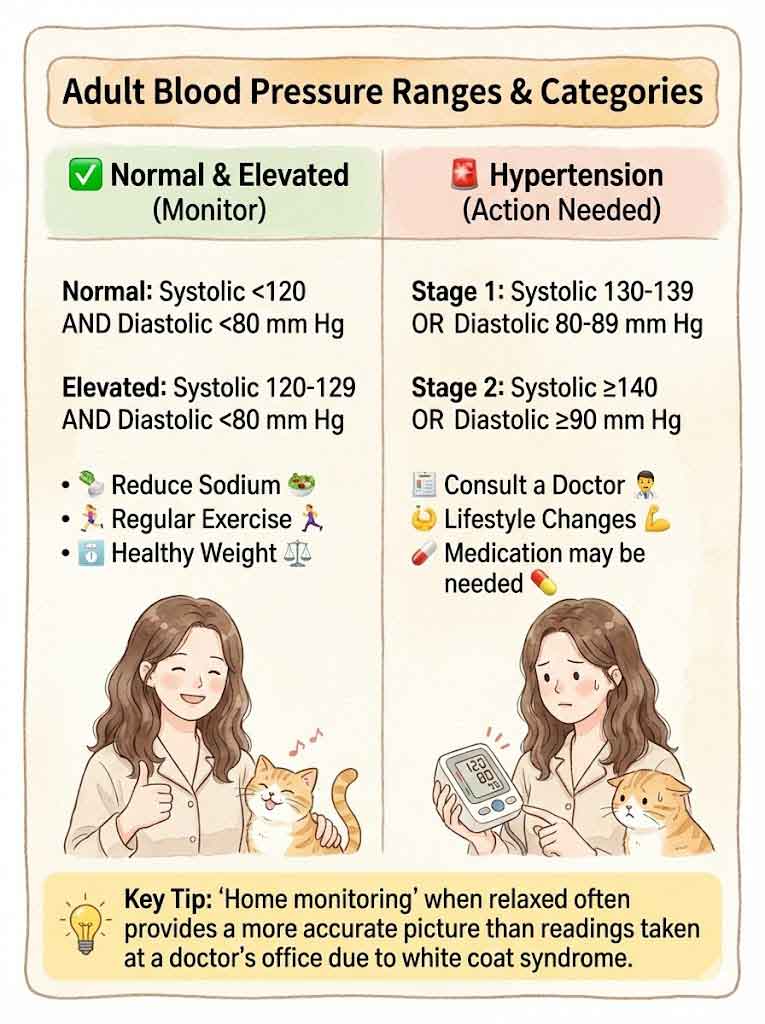
According to general medical guidelines (often aligned with standards like those from the American Heart Association), adult blood pressure is categorized into distinct stages. Compare your recent readings to these ranges. (If your systolic and diastolic numbers fall into different categories, the higher category is used).
✅ Normal and Elevated (Monitor)
-
Normal: Systolic less than 120 mm Hg AND Diastolic less than 80 mm Hg.
-
This is considered ideal. Maintain your current healthy lifestyle.
-
-
Elevated: Systolic between 120-129 mm Hg AND Diastolic less than 80 mm Hg.
-
This is a sign that your blood pressure is creeping up. It’s time to pay attention to your diet and exercise habits to prevent it from progressing to hypertension.
-
🚨 Hypertension Stages (Action Needed)
-
Hypertension Stage 1: Systolic between 130-139 mm Hg OR Diastolic between 80-89 mm Hg.
-
Lifestyle changes are necessary. You should consult a healthcare professional to discuss management strategies.
-
-
Hypertension Stage 2: Systolic 140 mm Hg or higher OR Diastolic 90 mm Hg or higher.
-
This stage usually requires a combination of lifestyle changes and medication. See a doctor promptly for evaluation and a treatment plan.
-
Lifestyle Tips for Healthy Blood Pressure
Managing your blood pressure is largely about adopting healthy daily habits.
-
Reduce Sodium Intake: Eating too much salt is a major contributor to high blood pressure. Limit processed foods, canned soups, and salty snacks.
-
Be Physically Active: Aim for at least 150 minutes of moderate-intensity aerobic exercise (like brisk walking) per week.
-
Maintain a Healthy Weight: Losing even a small amount of weight if you are overweight can significantly lower your blood pressure.
-
Limit Alcohol and Caffeine: Excessive consumption of both can raise your blood pressure.
Below is a summary card of the blood pressure ranges for quick reference.
#BloodPressureRange #NormalBloodPressure #AdultHealth #HypertensionGuidelines #HeartHealth #WellnessTips #HomeMonitoring