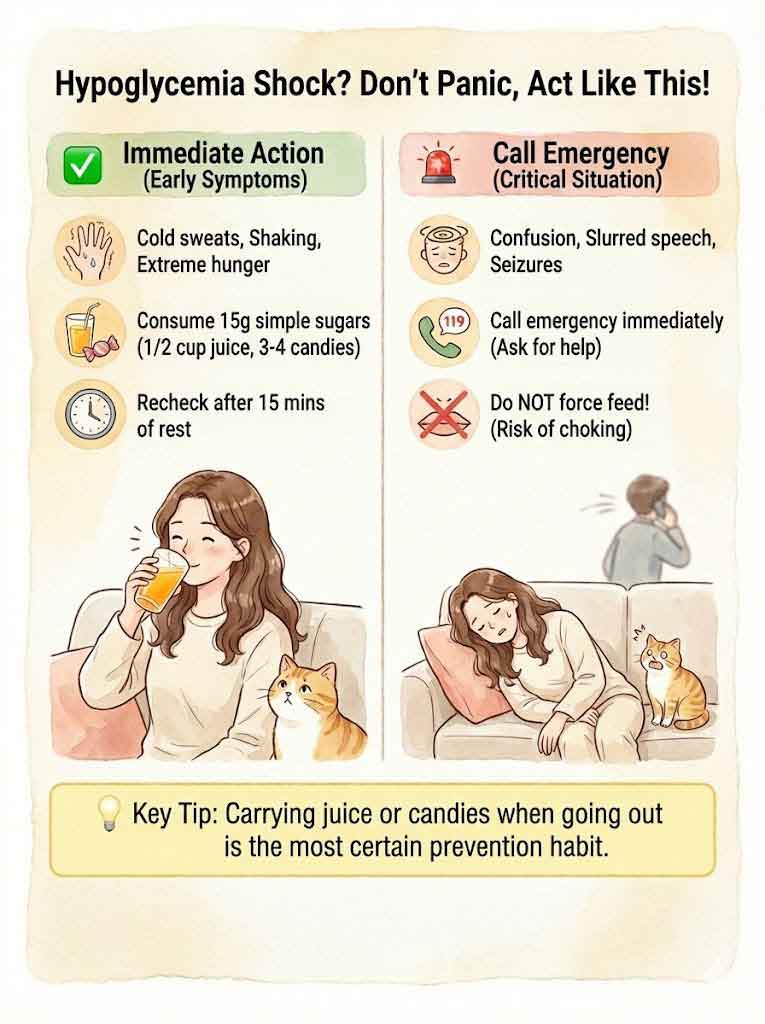
Have you ever experienced sudden darkness before your eyes, broken out in a cold sweat, and felt your hands tremble? The dizziness can be so intense that it’s scary to dismiss it as mere hunger. Hypoglycemia (low blood sugar) can strike without warning, but knowing the correct response can help you manage it effectively.
Today, we will look at why hypoglycemia occurs, how to distinguish between simple dizziness and a dangerous shock state, and most importantly, the immediate steps you need to take.
Why Does Hypoglycemia Happen Suddenly?
Hypoglycemia is a condition where your blood sugar, your body’s primary energy source, drops below necessary levels (usually below 70 mg/dL). While common in people taking medication for diabetes, it can also occur temporarily in anyone who has skipped meals for too long, exercised excessively on an empty stomach, or drastically reduced food intake for dieting. It is essentially your body signaling that it lacks energy.
Misconceptions and Truths about Low Blood Sugar
“If dizzy, I should eat chocolate?” Partially true, but not ideal. While you need to raise your blood sugar, foods high in fat, like chocolate or ice cream, slow down the absorption of sugar. In a hypoglycemic emergency, simple sugars that are absorbed quickly by the body, such as fruit juice, hard candies, or sugar water, are much more effective.
“Only diabetics get hypoglycemia?” No. As mentioned earlier, ‘reactive hypoglycemia’ can occur even in young, healthy individuals due to irregular eating habits or extreme dieting. It’s a symptom that can happen to anyone, so it is important to know how to handle it.
Core Criteria: Self-Care vs. Medical Emergency
When hypoglycemia symptoms occur, the most important thing is to determine whether the current state is manageable yourself or if it is a critical situation requiring immediate medical attention.
✅ Treatable Yourself (Mild to Moderate Symptoms)
-
Extreme hunger accompanied by a loss of energy.
-
Shaking hands or body tremors.
-
Cold sweats and heart palpitations.
-
Dizziness, anxiety, or irritability.
-
Lack of concentration and blurred vision.
🚨 Call Emergency Services Immediately (Severe/Hypoglycemic Shock)
-
Loss of consciousness or unresponsiveness when called.
-
Slurred speech or incoherent babbling.
-
Convulsions or seizures.
-
Inability to chew or swallow food independently. (※ WARNING: Never force food or drinks into the mouth of an unconscious person, as it can block the airway. Call for emergency help immediately!)
Life Management Tips: Healthy Habits to Prevent Hypoglycemia
Here are ways to prevent sudden hypoglycemia and manage your health.
-
Regular Meals are Key: Eating regularly at set times is the best way to maintain stable blood sugar levels.
-
Carry Emergency Snacks (Immediate Response): Always carry fast-acting simple sugars like 3-4 hard candies, a small juice box, or glucose tablets in your bag just in case when going out.
-
Manage Around Exercise: Avoid intense exercise on an empty stomach and have a light snack before and after working out to prevent a rapid drop in blood sugar.
-
Balanced Diet: A diet balanced with carbohydrates, proteins, and fats helps blood sugar rise and fall slowly.
Knowing the symptoms of hypoglycemia in advance makes it less frightening. A few small candies can be a reliable shield to protect you. How about packing an emergency snack in your bag starting today?
#Hypoglycemia #LowBloodSugarSymptoms #Dizziness #ColdSweats #Shakiness #DiabetesManagement #EmergencyResponse #BloodSugarControl #HealthTips